Showing posts with label diets. Show all posts

Tuesday, 7 February 2017

Zinc Deficiency, Immune Response & Inflammation

Zinc is where it’s at!


Zinc has a long history known as the mineral of the immune system. New research from Oregon State University demonstrated that it appears to affect how the immune system responds to inflammation. A zinc deficiency may play a role in chronic diseases that involve inflammation, such as cardiovascular disease, cancer and diabetes. I see this deficiency frequently on plasma zinc levels on my patients with autoimmune disease.
When zinc is removed, the cells that control inflammation activate and respond differently in a way that causes the cells to promote more inflammation, according to Emily Ho, a professor and lead author of the study.
Zinc is an essential micronutrient required for many enzyme and body functions. It is essential for growth and physical development, and for the metabolism of proteins, fats, and carbohydrates. Zinc is also vitally important to the immune system. Practically every enzyme reaction in the brain involves zinc, and so does the development and function of the central nervous system.

Zinc Deficiency and Inflammation

Approximately 12% of people in the US do not consume enough zinc in their diets, and this number is closer to 40% in those over 65 years of age. In older adults it is most likely a combination of eating fewer zinc-rich foods (meat and shellfish such as oysters) and malabsorption issues.
In this study, researchers examined the relationship between zinc deficiency and inflammation. They concluded that a zinc deficiency induced an increase inflammatory response in the cells. For the first time, researchers were able to show that reducing zinc caused improper immune cell activation and dysregulation of cytokine IL-6.


The researchers also compared zinc levels in young and old living mice. The older mice had low zinc levels that corresponded with increased chronic inflammation and decreased IL-6 methylation, which is an epigenetic mechanism that cells use to control gene expression. Decreased IL-6 methylation was also found in human immune cells from elderly people. 
This research suggests a potential relationship between low levels of zinc and increased inflammation that can occur with age. Thus, a zinc deficiency may be a bigger health concern than many people realize, especially in older populations.

by Designs for Health

Friday, 3 February 2017

The Best Vegetables to Eat for Weight Loss

Loading your plate with more veggies is a good way to drop those unwanted pounds. Veggies fill you up without a lot of calories. Plus, they're an incredible source of nutrients your body needs for good health. As far as the "best" vegetables, all veggies make healthy additions to your weight-loss plan, although the lower-calorie ones are especially good choices. If you've upped your intake of veggies and still aren't losing, consult a registered dietitian to evaluate your diet and help pinpoint potential pitfalls.


The Value of Veggies for Weight Loss

When it comes to weight loss, quantity may count more than calories, according to a 2007 study published in the American Journal of Clinical Nutrition. This study found that a group of obese women were able to eat less and lose weight by simply reducing their fat intake and eating more fruits and vegetables. Vegetables have a very low energy density -- which means they have few calories compared to their weight -- so they fill you up without putting much of a dent in your daily calorie allowance.

While eating more vegetables helps people lose weight without tracking calories, the numbers still count. Knowing how many calories you need to lose weight, and keeping tabs, is an important part of any weight-loss plan. With 3,500 calories in 1 pound of fat, you need to decrease your calorie needs by 500 calories a day to lose 1 pound a week. Use an online calorie calculator to help you estimate your calorie needs. For example, if you require 2,000 calories a day to maintain your weight, eating 1,500 calories -- 2,000 minus 500 -- a day should help you lose.

Non-starchy Veggies Are Best for Saving Calories

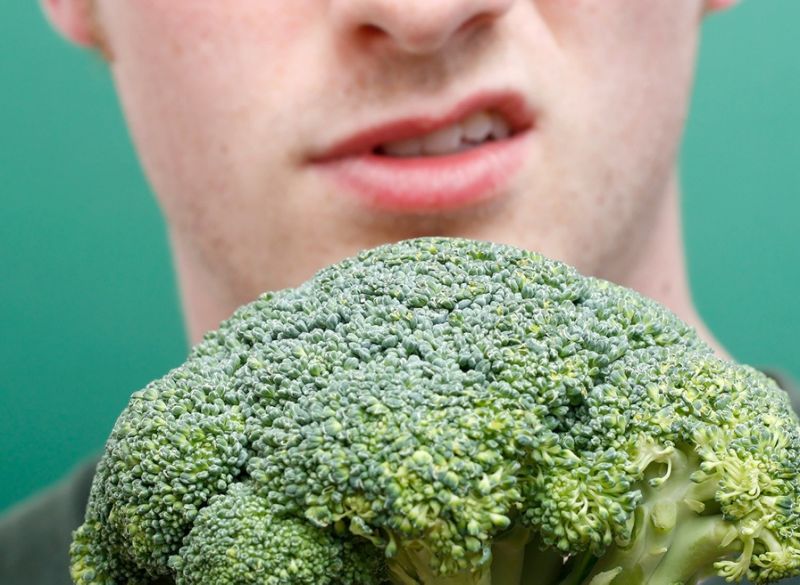
Of all the veggies, non-starchy ones are the lowest in calories, which makes them the best choice for weight loss. Filling your diet with these gems will surely help you lose the weight. Examples of non-starchy veggies include spinach, kale, broccoli, cauliflower, carrots, celery, cucumbers, beets, green beans, artichokes, eggplant, onions, mushrooms and peppers. Many weight-loss diets encourage you to eat as much as you like of these veggies.


While all non-starchy veggies make good additions to any weight-loss plan, some are especially beneficial. Raw leafy greens, such as spinach, kale and lettuce, have fewer than 10 calories per cup, so you can enjoy a large salad containing 4 cups and barely tap into your daily calorie needs. Sliced cucumbers, with 16 calories per cup, also make a good choice. Beets and carrots are a little higher in calories, with 50 calories per cup raw, but they still make good options.

Not only are these watery veggies low in calories, but they're also high in fibre. And getting more fibre in your diet helps you lose weight, according to a 2015 study published in the Annals of Internal Medicine.

Starchy Veggies Are Good, Too

They may be a little higher in calories than non-starchy veggies, but the starchy ones may benefit your weight-loss efforts, too. Starchy vegetables include potatoes, peas, plantains, winter squash, sweet potatoes and corn. If your hunger is getting out of control, you may want to throw a few boiled potatoes into the mix. These filling tubers are really good at keeping hunger pangs away, according to a 1995 study published in European Journal of Clinical Nutrition. Of 38 foods tested by researchers, boiled potatoes provided the most satiety value.

One cup of boiled potatoes has 140 calories. Sweet potatoes, which are rich in fibre and vitamin A, have 180 calories in 1 cup. Cut corn has 140 calories per cup and green peas 130 calories per cup.

Eat More Beans, Peas and Lentils

Legumes, which include beans such as chickpeas and kidney beans, split peas and lentils, are so rich in nutrients they not only count as a vegetable but as a protein as well. Like potatoes, legumes also have a satiety factor. This may be due to their fibre and protein content, both of which help with weight loss, according to a 2010 article published in Advances in Nutrition. 


Legumes are a little higher in calories than starchy vegetables, but given their appetite-control benefits, they make a good choice on your weight-loss plan. One cup of cooked kidney beans has 225 calories and 1 cup of cooked lentils 230 calories. While you can eat legumes by themselves, they also work well mixed with whole grains and non-starchy veggies.

by JILL CORLEONE, RDN, LD 

http://www.livestrong.com/article/375405-the-best-vegetables-to-eat-for-weight-loss/

Wednesday, 14 December 2016

The Real Reason Everyone's Fat And the First Step to Getting Lean

The world is getting fatter and everybody's an expert on why. Here's a list of what people blame:

  • Diets: Too restrictive, conflicting information
  • The fitness industry: Conflicting info, intimidating, too much overt sexiness
  • Sugar: Addictive
  • McDonald's: Makes us fat
  • Gyms: Intimidating
  • Spouses: Tempt us with junk food
  • Children: Make us buy junk food
  • Parents: Allowed us to overeat junk food as kids
  • Jobs: Cause stress, make us sit
  • Magazines: Use Photoshop and good-looking people
Do these things play a role in obesity? Indirectly, maybe. But the buck stops with you and your response to them.

The Ability to Take Responsibility

Is it really any wonder the world is becoming fatter? We're also becoming less capable of taking responsibility. It's a virtue that's going out of style. This sucks because the better you get at taking responsibility, the more likely you are to look for opportunity to fix your circumstances instead of becoming a victim of them. And if you haven't noticed, cry-baby victimhood is today's hottest trend.
This is how mental weakness turns into physical weakness. Weak people are quick to point the finger at outside sources instead of finding opportunities to overcome their personal challenges.
Granted, the things they blame can be legitimate challenges. There are physiological and psychological factors that make fat loss and muscle gain seem impossible. But NOBODY gets a free pass. That means fit people often have just as many (or more) personal disadvantages to fight against as fat people.

The Truth About Fit People

Everybody who's in shape fights for it in some way. It's not given to us. We all have personal disadvantages and challenges to overcome. So unless you're among the very few genetically gifted and environmentally blessed, you can't get lean without a struggle. You can't build muscle without a struggle. And you certainly won't maintain either without struggling in some way.
On top of that, your struggles will change yearly, monthly, sometimes even daily. So once you overcome your initial challenges, you'll be faced with more. And they happen everywhere: under the barbell, at school, in the doctor's office, in the kitchen or the car, anywhere! Getting in shape isn't a thing that happens exclusively at the gym. It's what you do constantly with every choice you make.
Barbell

The Fitness Fight

I wasn't a natural born athlete and don't have the genetics to be naturally or easily lean. As a kid I medicated stress and sadness with food. My role model was my big sister, who was bulimic. As a teen, I attended Overeater's Anonymous and ended up fighting my challenges with weight training, competitive bodybuilding, cross country, self-help books, and the grace of God.
It was hard. And I still had to overcome some crazy eating patterns in my twenties. But I fought back then and, with a different set of challenges, I fight now. Emotional eating and overeating no longer burden me, but that doesn't mean leanness and muscularity are just handed to me. Nor are they handed to anyone else who chooses to train regularly and eat wisely.
My challenges today? Injuries that I work around in the gym, painful food sensitivities, and chronically low iron. And once these are fixed a brand new set of challenges will come along later. That's life. But it's not a good enough reason to let myself go and blame the world for my missteps.

Your Body, Your Business

Most people haven't been bitten by the fitness bug. They're not into lifting, nor do they go to the store thinking about macronutrients, ingredients, or overall nutritional value. That's fine.
They're into what they're into. And they're often extremely smart people, which means that if they want to get stronger and leaner, they'll find ways. They can hire trainers, read books, do a bit of research, cook for themselves instead of eating out, imbibe a little less, sleep a little more, and plug into groups of people with similar challenges.
Same with you. If you're overweight, don't let anyone tell you that you don't have a choice, or that you got this way and it was totally out of your control. Why? Because if you think like that, then you probably won't ever feel competent enough to take control, at least not long-term.
If you don't care about strengthening your body or improving your health, that's your business. You will prioritize what's important to you. Just don't say the fitness industry failed you, or that diet books, food manufacturers, or your family is to blame for the repercussions you're facing now. It's your body and YOUR business, remember?

Sycophants Aren't Helping

A sycophant is someone who tells people exactly what they want to hear. Ass-kisser is a synonym.
So let's say YOU are fit. Maybe you're even in the business as a personal trainer, expert, or a variation of inspirational-millennial-life-coach. Yet you tell fat people it's not their fault, they have no choice, and they should embrace the bodies they have now – no matter how unhealthy or out of shape they are. That's bullshit and you know it.
You know that people who are out of shape could be making the best choices within their circumstances, no matter how unfortunate those circumstances are. And you know that "body acceptance" is a sham because their lives would be much easier if their frail frames and feeble joints weren't hauling around extra weight.
You know they'd feel better about themselves, have more energy, move more freely, take fewer meds, sleep better, get out more, have fewer doctors' appointments, deal with less pain, have better sex, and (ironically) enjoy their food a lot more than they do now.
There's a way to be both compassionate and honest. But by playing the sycophant you're encouraging people to be the victims rather than the masters of their circumstances. And I hope that people who are out of shape make the choices that prove you wrong. Because you see, if they can CHOOSE to get in better shape today, then they could've CHOSEN better behaviors in the first place that would have kept them from getting where they are now. There is a choice.
Your patronizing pity is more insulting than the brutal honesty of someone who says, "You're fat and here's what you can do about it."
I hope your clients flip the mental switch and take responsibility. I hope they embrace the struggle because that's how you overcome challenges. This requisite struggle is what most people avoid, but it means something new is happening. It means they're now fighting personal disadvantages, the way we all do when we make the choice to get in shape.

The First Step In Change

The longer you've let yourself go, the harder it'll be to create habits that'll make you leaner and stronger. And you won't ever change unless you see challenges as what they are: beatable. The good news is, the more punches you throw, the better you get at it.
Accusing other people for causing your circumstances only postpones the good stuff you could be enjoying. So personal responsibility is nonnegotiable. It's the first step.
Then expect temptation and plan how you're going to beat it. Temptation is inescapable and everyone faces it. If you're still blaming your spouse for sabotaging you with tempting food, don't count on changing. We're all tempted by about the same shit; your challenges aren't special. And even if you're injured or ill, there's still a way to choose the best options within your given set of circumstances.
Can't get support at home? Find it elsewhere, then be a role model for your family. It'll be a struggle, but it's supposed to be. Everyone experiences that. If you're not struggling, then you're probably not making progress. The struggle is what keeps you from getting weaker, fatter, less mobile, and more incompetent as the owner of your body.
The blame-game won't make you any fitter or healthier. It's not working for the rest of the world, so don't expect it to work for you. The question is, are you going to fight your challenges or let them own you? The choice is yours. It always has been. It always will be.
By Dani Shugart

Sunday, 11 December 2016

**INSANE** Three Insane Weight Loss Programs to Never Try!!!!

It's no secret that people are willing to go to extreme lengths to shed pounds. From emaciating cleanses and diets to military-style boot camps, people practically torture themselves to get the body they want. Sometimes, things cross over from extreme to just plain crazy. Here are some of the strangest weight loss programs people have tried.

The Tapeworm Diet
Tapeworms are parasitic creatures that attach themselves to the intestinal tract of certain mammals, including humans. Once inside the digestive system, tapeworms divert nutrients from the body into their own system, robbing the host of food midway through its transformation into useful energy. By out-competing the body for nutrients, it has the effect of prolonged fasting but the host doesn't ever stop eating. This can lead to extreme, dangerous weight loss. Using worm egg pills, which are illegal in the United States, people can literally infest themselves. While it is completely disgusting, it does work as a weight loss program... a little too well. In one reported case, a woman lost 60 pounds before the worm laid eggs. The eggs burrowed into her intestinal wall and then into her circulatory system, infecting her bloodstream and causing death.


The Cotton Ball Diet

For many people, their willpower to avoid eating is overcome by the hollow growl of an empty stomach. The cotton ball diet is one of a handful of weight loss programs that purport to fill the stomach without introducing any calories into the digestive system. Cotton balls are dipped in liquids like juice and swallowed, essentially tricking the stomach into satiation. The diet has repeatedly been condemned by health professionals who warn that ingesting even small quantities of cotton can cause intestinal blockage and dehydration, which can lead to nutrition deficiency. People have also been known to choke on the cotton. Worse still, many 'cotton balls' available at stores today are made of synthetic material that the body cannot digest without great effort.

Smoking Cigarettes
As unhealthy as smoking is, it's a common pound-shedding method. Nicotine is a natural appetite suppressant, and even pre-Columbian Amerindians were aware of this quality. Long-distance messengers in both North and South America were known to carry plugs of tobacco to hold them over on treks over hundreds of miles with little or no food. Today, many smokers note that one of the hardest parts about quitting is the weight gain that comes with cessation. While it may be one of the more effective weight loss programs, it is extremely unhealthy. Any health benefits of avoiding obesity are canceled out completely by the negative health effects of smoking. Those quitting smoking should maintain a healthy diet and implement an exercise regimen, both to keep extra pounds off and to reverse the negative cardiovascular effects of smoking.

By Andrea Avery